
If your attic feels too hot in summer or too cold in winter, your insulation may be part of the problem. Good attic insulation helps keep the temperature inside your home more comfortable. It can also help your heating and cooling system work less.
But which type of insulation is better for an attic: blown-in or batt insulation?
The answer depends on your attic, your home, your budget, and how much insulation you already have. For many homes in Spokane, blown-in insulation can be a great choice for an attic because it can cover small gaps and hard-to-reach areas. Batt insulation can also work very well, especially when the attic is being built or remodeled.
In this guide, we will compare blown-in vs batt insulation in simple terms. We will look at cost, R-value, installation, energy efficiency, and which option may be best for a Spokane home.
What Is Blown-In Insulation?
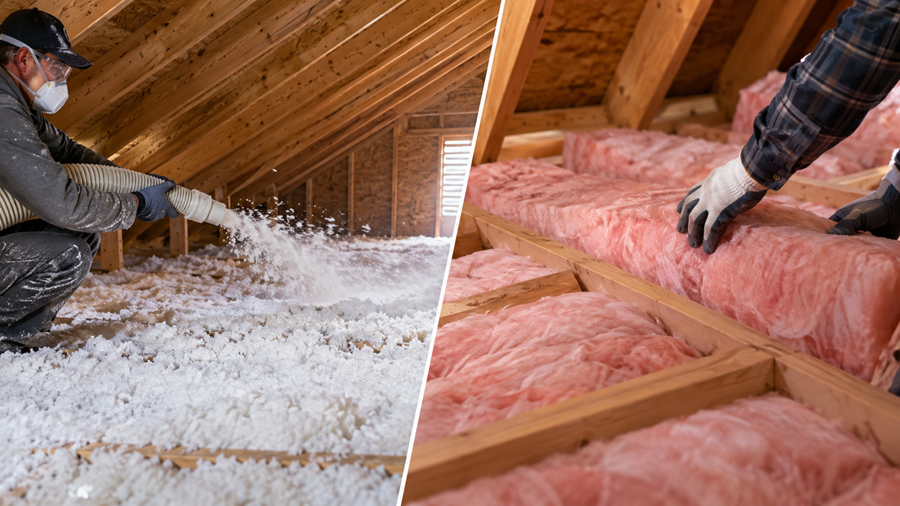
Blown-in insulation is made from loose insulation fibers. A special machine blows the material into the attic. The insulation spreads across the attic floor and fills spaces around joists, pipes, wiring, and other areas.
Blown-in insulation can be made from fiberglass or cellulose. At Therma-Lock Insulation, blown-in fiberglass is one of the insulation options offered to homeowners in Spokane and nearby areas.
One of the biggest benefits of blown-in insulation is coverage. Loose insulation can move into small spaces that may be difficult to fill with insulation batts. This can help create a more even layer across the attic floor.
Benefits of blown-in insulation
- Covers small gaps and hard-to-reach areas
- Creates a more even layer when installed correctly
- Works well for many existing attics
- Can be installed over some existing insulation
- Helps improve the home’s energy efficiency
- Good option for attic insulation upgrades
For an older Spokane home with uneven or thin insulation, blown-in insulation may be worth considering.
What Is Batt Insulation?
Batt insulation comes in large rolls or pre-cut sections. Fiberglass is a common material used for batt insulation. The batts are placed between attic joists or other framing members. They are designed to fit the space and create a layer of thermal protection.
Batt insulation is common in new construction and remodeling projects because it is easy to measure and install in open spaces. Therma-Lock Insulation describes fiberglass batt insulation as an affordable and common insulation option for homes and commercial properties.
Benefits of batt insulation
- Simple design
- Easy to measure
- Works well in open framing spaces
- Commonly available
- Can be a cost-effective option
- Useful for new construction and remodeling
However, batts need to fit the space correctly. If there are gaps around the batts, air and heat can move through those areas. Cutting the batts properly and installing them without gaps is important.
Blown-In vs Batt Insulation: Main Differences
So, how do these two insulation types compare?
Here is a simple look at the main differences:
| Feature | Blown-In Insulation | Batt Insulation |
| Material | Loose fiberglass or cellulose | Fiberglass or other batt materials |
| Installation | Blown into place with a machine | Placed between framing |
| Small gaps | Excellent coverage | Can be harder to cover |
| Existing attic | Often a good choice | May require more work |
| Open framing | Works well | Works very well |
| Installation speed | Often quick for an open attic | Can be quick in open spaces |
| Final performance | Depends on depth and installation | Depends on fit and installation |
| Best use | Many existing attics | New construction and open spaces |
The important thing to remember is that the best insulation is not only about the material. Installation quality matters a lot.
Which Has a Higher R-Value?
R-value measures how well insulation resists heat flow. A higher R-value generally means more resistance to heat moving through the insulation. But you should not compare insulation only by looking at the R-value printed on a package. The amount installed, the thickness, the density, and the way it is installed all matter.
Washington’s energy code requires insulation to meet specific performance requirements. The current Washington State Energy Code is based on the 2021 IECC and has been effective since March 15, 2024.
For homes in Climate Zone 5, the Washington residential energy code lists R-60 for ceilings in its prescriptive insulation table. That is why homeowners should focus on getting the attic to the proper insulation level instead of simply choosing one insulation type because it sounds better.
Is Blown-In Insulation Better for an Attic?
In many existing homes, blown-in insulation has some important advantages. An attic floor can have many obstacles. There may be electrical wires, pipes, framing, vents, and other small areas.
Loose-fill insulation can spread around these obstacles. This makes blown-in insulation a popular option when an attic needs more insulation. It can also be useful when old insulation is thin but does not need to be completely removed.
However, every attic is different. Before adding insulation, the attic should be checked for problems such as moisture, air leaks, damaged insulation, and ventilation issues. Adding insulation without fixing an attic problem first may not give you the results you expect.
Is Batt Insulation Better for an Attic?
Batt insulation can be a good choice when the attic has open, easy-to-access spaces. For example, during new construction or a major remodel, batts can be placed neatly between framing members.
They can also be a good choice when the space is designed for batt installation. The main challenge is getting a good fit. If a batt is too short, too narrow, or cut poorly, gaps can remain around it. Those gaps can reduce the overall performance of the insulation. Good installation is just as important as the insulation material itself.
Blown-In vs Batt Insulation Cost
Cost is one of the first things most homeowners want to know. But there is no single price for every attic. The final cost can depend on:
- Attic size
- Amount of insulation needed
- Current insulation
- Access to the attic
- Type of insulation
- Labor
- Whether old insulation needs removal
- Air sealing or other attic work
- Ventilation work
Blown-in insulation may be a cost-effective way to add insulation to an existing attic because the material can be installed across a large open area relatively quickly. Batt insulation may make sense when the attic already has open cavities that are easy to fill. The best way to compare prices is to have the attic inspected and get a quote based on the actual space.
Which Is Better for Spokane Homes?
Spokane has cold winters and warm summers. That means your attic insulation needs to work throughout the year. A properly insulated attic can help slow heat loss during the winter and reduce heat gain during the summer. For Spokane homeowners, the goal should be to create a well-insulated attic that meets the needs of the home and follows local building requirements.
The City of Spokane currently lists the 2021 Washington State Energy Code among its adopted codes. Therma-Lock Insulation recommends R-60 for attics in Eastern Washington and North Idaho, which is also consistent with the R-60 ceiling value listed for Climate Zone 5 in the Washington residential energy code.
Because every home is different, it is a good idea to have your attic checked before deciding how much insulation to add.
Don’t Forget About Attic Ventilation
Insulation is only one part of a good attic system. Ventilation matters too. If your attic has soffit vents, insulation should not block the airflow path. Washington’s residential energy guidance calls for baffles near soffit and eave vents when air-permeable insulation is used in vented attics.
This is important because simply adding more insulation is not always the complete answer. Your contractor should look at the insulation, ventilation, and air sealing together.
What About Old Attic Insulation?
If your home has old insulation, you may wonder if it needs to be removed. Sometimes old insulation can stay in place. In other cases, removal may be the better option. Wet, damaged, dirty, or contaminated insulation may need special attention.
Therma-Lock recommends an attic insulation analysis for older homes and provides attic insulation removal and replacement services. A professional inspection can help determine what you have now and what needs to be done next.
How Do You Choose the Right Attic Insulation?
Start by looking at your attic, not just the insulation product. Ask these questions:
1. How much insulation do I have now?
If you only have a thin layer, adding insulation may make a big difference.
2. Is the insulation evenly installed?
Look for areas where the insulation is missing or much thinner than other areas.
3. Are there gaps?
Gaps around pipes, wires, framing, and attic openings can affect performance.
4. Is there moisture?
Moisture problems should be addressed before adding new insulation.
5. Is the attic properly ventilated?
Make sure insulation does not block required ventilation paths.
6. What R-value does my home need?
For Spokane-area homes, the target should be based on the applicable Washington code and the home’s specific situation.
Blown-In vs Batt Insulation: Which One Should You Choose?
So, which is better?
For many existing Spokane attics, blown-in insulation is a strong choice. It can spread around obstacles and cover areas that may be difficult to fill with batts. Batt insulation can be a better fit for open framing, new construction, or certain remodeling projects.
Neither option is automatically better for every home. The biggest factor is proper installation. Even the best insulation will not perform as expected if it is installed incorrectly, compressed where it should not be, or installed with large gaps.
Why Professional Installation Matters
Attic insulation may look like a simple home improvement project, but there are several things to consider. A professional insulation contractor can look for insulation gaps, ventilation problems, moisture concerns, and areas that need attention before the new insulation is installed.
In Washington, blown-in insulation also has specific documentation requirements. The residential energy code requires the thickness of blown-in or sprayed fiberglass and cellulose roof or ceiling insulation to be marked at specified locations throughout the attic. That makes proper installation and documentation important.
Final Thoughts
When comparing blown-in vs batt insulation, there is no one-size-fits-all answer. Blown-in insulation is often a great choice for existing attics because it can cover irregular areas and work around obstacles. Batt insulation is a practical option for open framing, new construction, and many remodeling projects.
For a Spokane home, the goal should be more than simply choosing the cheapest insulation. You want the right R-value, good coverage, proper installation, and good attic ventilation. If you are not sure what your attic needs, start with an inspection.
Therma-Lock Insulation provides attic insulation services in Spokane, WA, including blown-in insulation, batt insulation, and attic insulation removal and replacement. The company serves Spokane and surrounding areas in Eastern Washington and North Idaho.
A professional attic evaluation can help you understand what insulation you have now, what is missing, and which option makes the most sense for your home.
Frequently Asked Questions
Is blown-in insulation better than batt insulation?
For many existing attics, blown-in insulation can be a great option because it can cover small gaps and areas around obstacles. Batt insulation can work very well in open framing. The best choice depends on the attic.
What R-value should an attic have in Spokane?
The Washington residential energy code lists R-60 for ceilings in Climate Zone 5. Your home’s exact requirements can depend on the project and applicable code.
Can you put blown-in insulation over old insulation?
In some cases, yes. The existing insulation should first be checked for moisture, damage, contamination, and other problems.
Is batt insulation cheaper than blown-in insulation?
The cost depends on the attic, materials, labor, access, and amount of insulation needed. A professional quote is the best way to compare the actual cost for your home.
How long does attic insulation last?
The useful life depends on the material, installation, moisture exposure, pests, and other conditions. Wet or damaged insulation should be inspected and may need replacement.
Should I remove old attic insulation before adding new insulation?
Not always. It depends on the condition of the existing insulation. A professional attic inspection can help determine whether removal is needed.
Does more attic insulation always mean a better home?
Not necessarily. Insulation should be installed correctly and combined with proper air sealing and ventilation. Simply adding insulation without fixing other attic problems may not solve the issue.
Who can inspect my attic insulation in Spokane?
A local insulation contractor can inspect your attic and recommend the right approach based on the current insulation, attic condition, ventilation, and the needs of your home.
Ready to improve your attic? Contact Therma-Lock Insulation for a professional attic insulation evaluation in Spokane, WA.